In my quest to learn about the natural history of Bunga, I’ve so far been investigating how geology, geography and soils have interacted over time with plant species and Homo sapiens. Something that hasn’t been able to get a look in yet is birds!
With this post, I want to open up a new front by beginning to think about how birds fit into the natural history of this area. We are blessed with so many and varied bird species here. I’m starting with one of the smallest and most characterful little creatures — and one that Ella and I have both fallen for — the Hooded Plover (Thinornis cucullatus) or, hoodies for short.
Hoodies are easy to miss. They are quite small (on average just 21cm), but they are very cute. For much of this year there has been a pair living on South Bunga beach and watching their legs carry them scuttling along the sand as waves rolled in and out has been a delight.
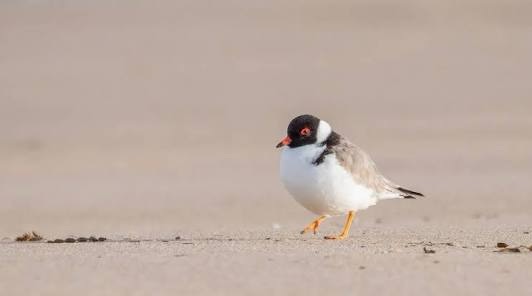
Image: Birdlife Australia
The NSW Department of Environment & Heritage classifies them as “critically endangered” with less than 70 of the birds left in the state, and all of those live here on the south coast. At Bunga, there are signs up at all the coastal entrances to Mimosa Rocks National Park, warning that they are an endangered species.
Hoodie’s don’t make it easy for themselves. They lay their eggs directly in little nests or, scrapes, dug into the sand above the tide line. Both parents share the care of their young. But as slow developers and exposed on the beach, the young are very vulnerable — the eggs take about 28 days to hatch and then the young chicks require another 5 weeks before they can fly. During this time, other species such as humans, dogs, cats, foxes, goannas, seagulls and ravens all pose great danger.
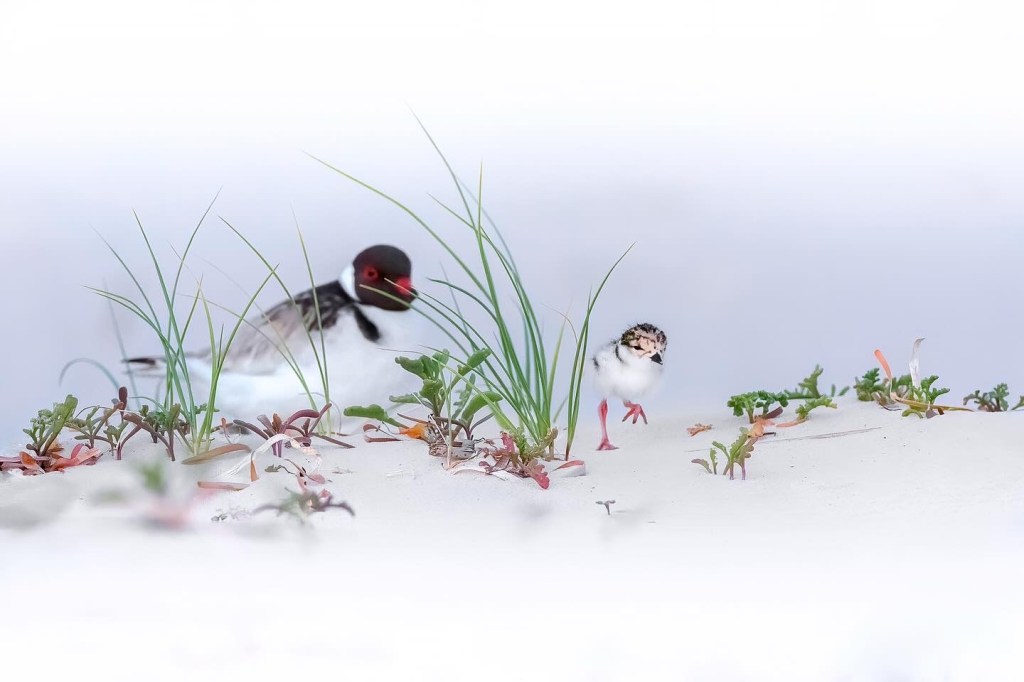
Image: Simon Ashfield-Smith
If danger approaches, the parents give a sharp warning call for the chicks to hide. As a last line of defence the parents attempt to divert approaching predators by making themselves a target — feigning injury and dragging a wing along the ground as they walk away from the nest, before suddenly taking flight themselves just in time. It works, but not often enough it seems. The pair at the northern end of our beach are no longer with us.
Hooded Plovers are non-migratory and seem to take up residence in their claimed patch, unless forced to move. Despite their small size and vulnerabilities, these quirky little birds are surprisingly determined about patrolling their turf. It’s a great source of delight to us, seeing them darting along the sand, dodging wind gusts, waves and any other challenge that comes their way as they hunt for crabs.
But for every rule there are exceptions. The NSW National Parks and Wildlife Service has one documented highly anomalous case of a (tagged) hoodie from the Far South Coast hoodie moving 850km further up the coast and winning national coverage for his efforts!
Hooded Plovers normally stay committed pairs, repartnering only if a mate dies. But a leading local authority, Leo Bērziņš, from the Far South Coast Birdwatchers group, told me of one a fascinating female in the area he had tracked. When a second female bird living further along the beach died, this one abandoned her existing partner and moved in with the ‘widower’ up the beach! Leo speculated that he may have had a better patch of territory than her less well endowed previous partner.
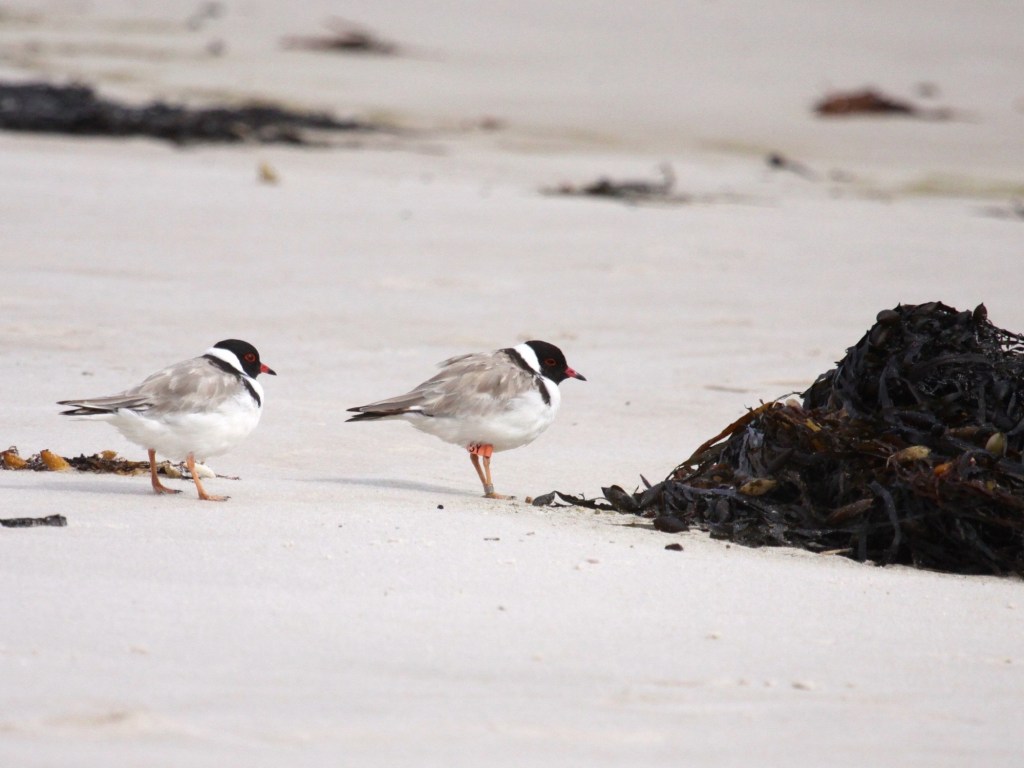
Image: eBird.org
Determined as these tiny as these birds are to make life work, I can’t help wondering what the future holds for them. Other species (especially invasive predators) are such a threat, it’s not easy to see Thinornis cucullatus prevailing in the competition for survival among species. Thankfully, at least some humans are trying to help, but is this a battle that can be won? Bunga, Australia and the world in general will be much the poorer if not.
References
Bega Valley Shire Council, Threatened Shorebirds. Link
Bird Life Australia, Hooded Plover. Link
eBird.org, Hooded Plover. Link
Far South Coast Birdwatchers Inc. Link


Leave a Reply